
Reference rates and bank rates: why amounts differ
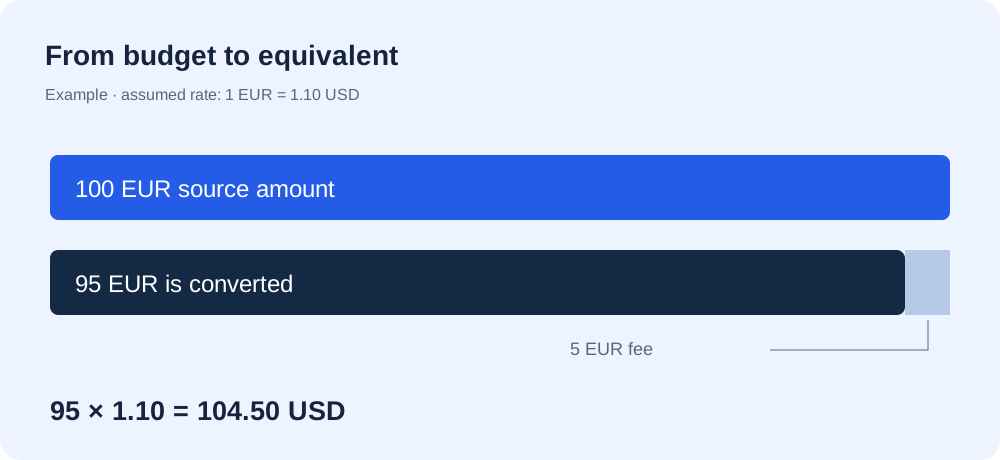
Understand the difference between a reference rate, a bank rate and the amount actually paid out — with a worked example.
Two rates with different purposes
A reference rate provides a common comparison point. A bank rate is part of specific terms for an exchange or payment. A difference between the two is therefore not automatically an error. Timing, rate direction, product and fees may differ. A daily reference value is not a binding price at which a bank must exchange any amount.
What the reference rate tells you
Reference rates provide guidance and are not binding exchange prices. They are daily observations, not trading prices updated every second. We display the observation date supplied with the data. Even a newly loaded value may therefore be from the previous publication day, particularly at weekends.
Measure the difference in the amount received
Suppose a hypothetical reference rate is USD 1.10 per EUR. EUR 1,000 then equals USD 1,100. An offer pays only USD 1,070 after all costs. The difference from the reference amount is USD 30, or approximately 2.73% of that amount. This is a comparison for this amount and time, not a universally applicable fee percentage for the provider.
What you need for a fair comparison
Compare the same source currency, target currency and amount. Check whether a fixed fee is paid separately or deducted from the amount being exchanged. When the rate is set also matters: a rate quoted when ordering may differ from the rate at later settlement. Record the total amount charged and how much reaches the recipient.
What our converter cannot assess
The converter does not know your personal card terms or individual bank agreements. It can neither guarantee an exact future charge nor establish whether a provider is good value overall for you. Use the reference amount as a starting point and add the actual agreed costs. Your provider's documented rate and fee rules determine how a statement should be checked.
Understand the calculation
The numerical examples are hypothetical. How the converter works explains the calculation and its limits.